
I’ll never forget the moment: our team had just merged a major micro-service feature into production at 2 a.m. The next morning the first defect came in — stemming from a change we thought was low-risk. We had a robust regression suite, yet somehow, the edge case slipped through. It hit me: our testing process was no longer keeping pace with the velocity of our delivery. I resolved that moment to shift how we approach Quality Engineering. And that’s where the paradigm of Agentic RAG came into our story.
Here, we talk about how to design a workflow for Agent-augmented Retrieval-Augmented Generation (RAG) in QE — not the high-level “what it is” (you already know that), but the how, from architecture to retrieval strategy, from agents to execution loops. We’ll talk about when and where it applies, where it doesn’t, and what to watch out for. And because you’re reading this, we’ll weave in how Omniit.ai (our AI-driven cloud testing platform) fits as the backbone of this new QE ecosystem 🙂
1. High-Level Architecture for Agentic RAG in QE
When I mapped out our test automation architecture on the whiteboard, I realized the new workflow had to look more like a living feedback loop than a linear pipeline. With Agentic RAG, you’re moving from “script → execute → report” into “sense → decide → act → learn”.
Below is a breakdown of the major components and how they should link.
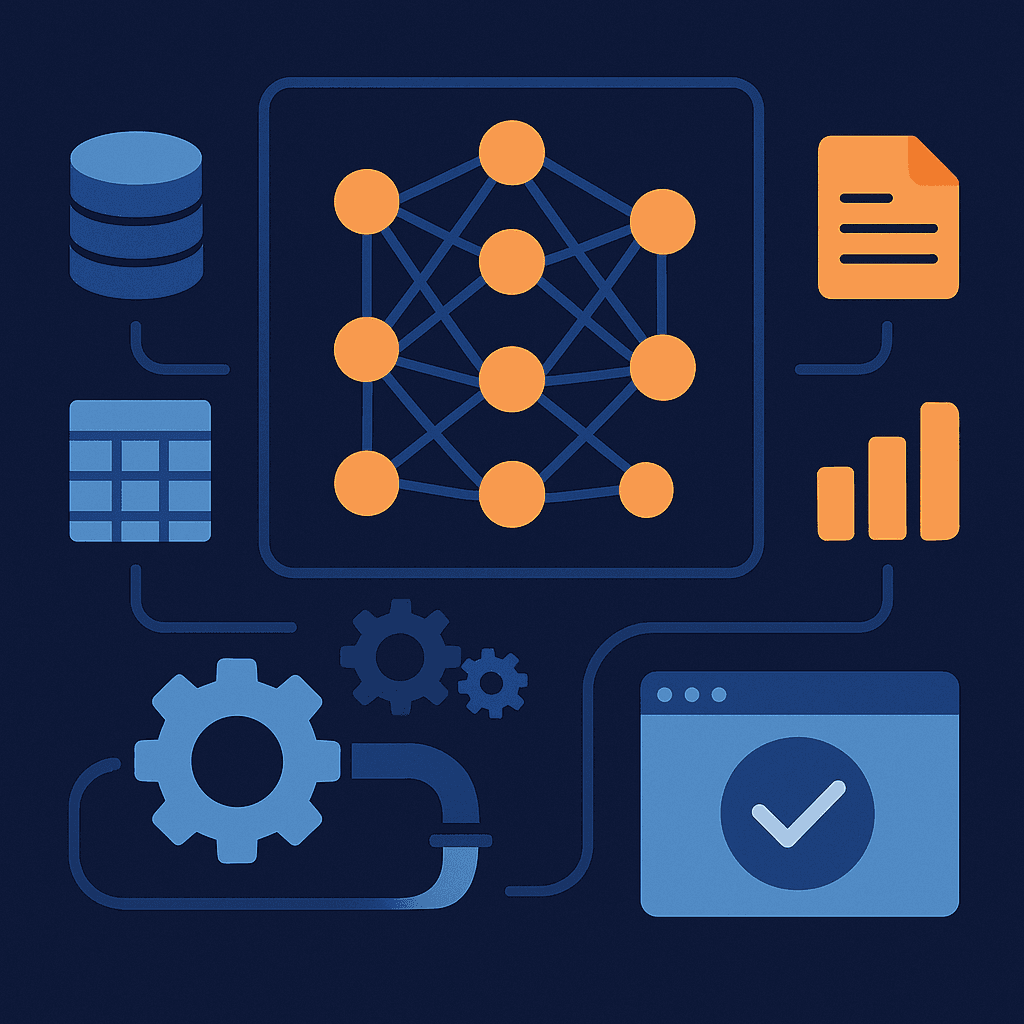
Architecture Components
- Trigger Layer: Your starting point — could be a new build, code commit, architecture change, requirement update, defect root-cause.
- Knowledge Base Layer: Includes vector stores, document stores, graph databases of past test-cases, defect logs, architecture docs, release notes, test-data sets.
- Retrieval Layer: Embedding models + vector search + optional graph traversal that pulls in relevant contextual knowledge.
- Agent Orchestration Layer: Routers, planners, execution agents that decide what to retrieve, how to generate/adapt tests, which to execute.
- Generation/Adaptation Layer: The test-case generator, script modifier, data-generator using RAG (the retrieved context + LLMs + agent logic).
- Execution / Automation Engine: The real test run engine, ideally on a scalable cloud platform such as Omniit.ai.
- Feedback & Learning Loop: Test results, defect outcomes, execution logs feed back into the knowledge base; agent logic refines itself over time.

| Component | Function | Typical Tools/Tech |
|---|---|---|
| Knowledge Base | Store past artifacts, logs, docs | Vector DB, Graph DB, Document Store |
| Retrieval Layer | Retrieve relevant context for a change | Embeddings, Vector Search |
| Agent Orchestration | Decide what to test, how to generate/adapt | Planner Agents, Tool-Invocation Logic |
| Generation Layer | Generate/adapt test-cases/scripts/data | LLMs + RAG, Prompt/Template Engine |
| Execution Engine | Run automation, collect results | Cloud test platform (Omniit.ai) |
| Feedback Loop | Learn from outcomes, update KB, refine agents | Metrics dashboard, analytics engine |
Tip From Practice:
When you sketch your architecture, mark handoff points where traceability is important. For example: when the agent hands off to the execution engine, ensure there’s a link between generated test-case ID and execution result so the feedback loop is closed.
2. Defining Agent Roles & Workflow Steps
In my years of leading QE teams, one of the most misunderstood things is the term “agent”. People think of bots or scripts. But in this architecture, an agent is a decision-making entity with a role. Designing your workflow means defining which agents you need. Here are how I define them and how they plug in.
Agent Roles
- Routing Agent
- Function: Given a change event or trigger, decides which knowledge sources and which workflows should be invoked (e.g., UI change vs API change).
- Reasoning: Helps avoid retrieving irrelevant docs, focuses the pipeline.
- Planning Agent
- Function: Breaks down the high-level change into actionable sub-tasks (“UI redesign”, “API version bump”, “DB schema change”) and decides test coverage areas.
- Generation/Adaptation Agent
- Function: Utilises retrieved context to generate new test-case descriptions, update existing ones, generate automation script skeletons, identify test-data.
- Execution Orchestrator Agent
- Function: Triggers runs via the automation framework, monitors progress, handles parallel execution, failure routing.
- Learning Agent
- Function: Consumes past runs and defect data to refine retrieval/generation logic, update the knowledge base, improve agent decision rules.

Workflow Step-by-Step
- Trigger (e.g., new build pushed) → Routing Agent identifies impacted zones.
- Planning Agent breaks change into test-areas.
- Retrieval Layer pulls context based on planning agent’s input.
- Generation/Adaptation Agent creates or modifies test-cases/scripts/data.
- Execution Orchestrator sends tasks to Omniit.ai, runs tests, captures results.
- Learning Agent analyses outcomes, updates knowledge base, flags for human oversight if needed.
- Loop back into architecture for next iteration.
My Learnings:
In the first few cycles, I’d recommend human-in-the-loop for the Generation/Adaptation Agent — meaning the agent proposes test-cases, a senior tester reviews them. That builds trust in the system before fully autonomous hand-off.
3. Designing the Retrieval & Knowledge Base Strategy
From my perspective, retrieval is one of the hardest parts — if you don’t get your retrieval + knowledge base right, the rest of the workflow will grind. The agent won’t have good context, your generated tests will be weak. Let’s unpack what you need to think about.
Key Considerations
- What knowledge sources to store
- Past test-cases and metrics
- Defect logs and root-cause analyses
- Architecture docs, requirement specs, release notes
- Build metadata, version changes
- Test-data sets and environments
- Representation & retrieval mechanisms
- Vector embeddings for semantic similarity search
- Graph databases to capture relationships (modules, dependencies)
- Document stores for full-text retrieval
- Versioning of artifacts to support time-based retrieval
- Performance & relevance
- How you chunk documents, embed them, index and retrieve
- How you score and rank retrieval results (precision/recall trade-off)
- Freshness & traceability
- Ensure update mechanisms when new releases or defects occur
- Maintain links: generated test-case → source artifact → execution result
- Governance & quality of knowledge base
- Clean, tagged, well-structured data improves retrieval
- Data-drift management: out-of-date docs lead to poor output
Knowledge Source Types vs Retrieval Strategy
| Source Type | Representation | Retrieval Strategy |
|---|---|---|
| Test-case history | Vector embeddings | Similarity search based on new change context |
| Defect logs | Graph + vector | Retrieve past defects tied to modules changed |
| Architecture docs | Document store + vector | Retrieve relevant module docs & dependencies |
| Build metadata | Structured data | Use filters (version, date) + similarity search |
| Test-data sets | Structured/unstructured | Retrieve relevant data sets & variability |
Tip From My Practices:
Start with small, high-value knowledge sources (like defect logs + test-case history) and get embedding/retrieval tuned before scaling to the full enterprise KB. The “house of cards” often fails when KB is poorly structured.
4. Mapping the Test Generation & Adaptation Logic
Here’s where I get excited — this is where the agentic RAG system creates value. After retrieval, the magic happens: generation or adaptation of artefacts. But this isn’t “just ask the LLM and you’re done”. It’s about structured generation, contextual fidelity, and integration into automation frameworks.
What to Generate / Adapt
- New test-scenarios: high-level descriptions of what needs testing.
- Automation script skeletons: code templates in your framework (e.g., Playwright, Selenium, API-test framework).
- Updated test-data sets or synthetic data for edge cases.
- Negative/test-failure scenarios: not just happy paths but “what could break”.
- Tags/metadata: priority, trace to requirement/defect, impacted modules.
Input to Generation
- Retrieved context (e.g., past defects, architecture change, test history)
- Change description (from planning agent)
- Test strategy constraints (risk areas, SLA, regulatory needs)
Generation Workflow
- Generation/Adaptation Agent builds prompt + instructions: e.g., “Based on API version bump from v2 to v3 in module M, and defect D from last release, create 5 new test cases prioritising edge-data, update existing test script code skeletons accordingly.”
- LLM + retrieval context generates output.
- A validation step (either human or automated) checks output: traceability links, completeness, script compilability.
- Handoff: output is sent to execution engine (Omniit.ai) with metadata.

My Tip:
Have the agent generate moderate volume initially. Rather than “generate 500 test-cases”, ask for “generate 50 with priority ranking” so the system remains manageable and outputs are reviewable. As trust builds, scale up.
5. Integration with the Execution Pipeline and Feedback Loop
You may have the smartest agentic RAG workflow in the world — but if the output doesn’t feed into your execution pipeline and back into your knowledge base, you won’t capture the value. This integration is what operationalises the vision.
Pipeline Integration
- CI/CD Hook: Trigger agentic workflow when build is merged, or requirement changes.
- Cloud execution: Run the generated/adapted tests via a scalable platform (Omniit.ai) across environments.
- Data collection: Execution results, test-failures, defect links, test-duration, resource usage.
- Feedback ingestion: Learning Agent consumes execution data: which generated tests caught defects? Which did not? What false positives?
- Knowledge base update: Add new test-cases, updated scripts, new defect insights; retire obsolete assets.
Metrics and Dashboards
- Cycle time: commit → test-generation → execution → report.
- Generated vs manual test ratio: how many artefacts came from agentic workflow.
- Defect-escape rate: defects in production per release compared with prior.
- Test-suite maintenance cost: reduction in time spent by humans.
- Quality of generated artefacts: percentage of auto-generated tests accepted without modification.

My Tip:
Champion the dashboard to the executive team. Show how the generated-test ratio increasing, cycle time shrinking, defect-escape rate dropping. It builds momentum.
6. Where and When Agentic RAG is Necessary & Beneficial (…and When It Isn’t)
AI is hot. I’ve seen teams rush to adopt “agentic RAG” because it sounds cool — but without the right context the investment falls flat. Let’s talk about scenarios where it is highly beneficial, and equally important, scenarios where it may not make sense yet.
✅ Scenarios Where It’s Highly Useful
- Large legacy systems with frequent change, evolving architecture, and rich defect/test history — ideal for retrieving past context and adapting tests.
- Highly inter-connected systems (microservices, APIs + UI + data) where change ripple is hard to manually map.
- When you want to automate test-case generation/adaptation at scale (new features, hotfixes, regression) with minimal human overhead.
- Knowledge-rich domains, e.g., finance, healthcare, large enterprise, where documentation, audit logs, compliance artifacts exist.
- Continuous improvement context: you want learning loops in your QE practice, not just one-off scripts.
✖️ Scenarios Where It’s Not (Yet) the Right Fit
- Small systems or low-velocity applications: if your releases are infrequent, modules limited, and complexity low, the cost of building the agentic workflow may outweigh the benefits.
- Systems with minimal or scattered knowledge: If you lack defect logs, test-history, specification traceability, the retrieval layer will struggle.
- When autonomy is not allowed/desired: e.g., regulated domain where human oversight at every step is mandatory, and you cannot trust agent-generated artefacts without constant review.
- Early phases of automation maturity: If you’re still building basic automation, stabilising your basic test suite before layering agentic workflows might be wise.
- Cost or resource-limited environments: agentic RAG introduces added infrastructure (vector stores, agents, monitoring). If the ROI isn’t clear yet, proceed cautiously.
Sample Scenarios
- Scenario A: A global e-commerce company releases new features every two weeks across mobile/web, many microservices, complex integrations. Agentic RAG helps retrieve past failures, generate new tests, accelerate execution.
- Scenario B: A banking platform undergoing regulatory compliance changes with extensive documentation and audit logs. Agentic workflow retrieves old audit defects and test-cases, plans high-risk coverage, and generates scripts efficiently.
- Scenario C (not needed yet): A small internal administrative tool with one release per quarter, a short UI, one database, only a handful of testers. Manual scripting + regression suffices; agentic overhead may not pay off.

7. Key Considerations & Common Pitfalls
Even as I advocate for Agentic RAG, I’m realistic about the risks. Coming from years of “that test suite just broke after UI change” scenarios, I want to highlight what to watch out for.
Pitfalls
- Knowledge-base quality & drift: If your KB is outdated, inconsistent, or untagged, retrieval suffers and generation outputs degrade.
- Agent hallucination / mis-decisions: Even with RAG, agents may generate incorrect or irrelevant test-cases. Human-in-loop initially helps.
- Over-generation / test-bloat: Agents may generate too many test-cases, creating execution overload. Need to prioritise.
- Integration complexity: The plumbing between retrieval, generation, automation frameworks, CI/CD and cloud execution is non-trivial.
- Traceability & governance: Especially in regulated industries you must track which agent generated what, what data was used, how decisions were made.
- Cost & latency: Agentic workflows introduce infrastructure overhead and may slow initial cycles until tuned.
- Team readiness & culture: Shifting to agentic workflows means change in human roles — testers becoming supervisors rather than script-writers. Management must be ready for that.
Best Practice:
Start small with a pilot: one module, one set of test-cases, one automation framework. Gather metrics. Prove value. Use that success to scale. Invest in building your KB governance early. And champion the human-in-the-loop phase to build trust.
8. What’s Next?
In the next instalment of this series – “Building the Automation Framework & Toolchain for Agentic RAG in QE” – we’ll dive into the code and technology stack for how to implement retrieval (vector stores, embedding models), agent orchestration frameworks (LangChain, custom agents), integrating with test frameworks, and how Omniit.ai acts as the execution engine. Stay tuned.
If you’re already exploring this journey, reach out to Omniit.ai — we’ll walk you through how to get started, how to map your knowledge base, how to build initial agent workflows, how to execute at scale. Your QE future is calling.